
Jump To
Why Birmingham tends to offer stronger scrap car prices
The B postcode has one of the highest concentrations of licensed Authorised Treatment Facilities in England outside London. That density of buyers creates genuine competition, which pushes quotes upward. If you are scrapping a car in Birmingham, you are operating in a market where buyers need to be sharp to win vehicles — and that works in your favour.
Birmingham also sits at the centre of the West Midlands' established metal recycling industry. Scrap metal processing infrastructure in the region is mature and well-connected to both domestic steel mills and export routes, which keeps the local market responsive to live metal prices.
Weight as the starting point
Every scrap car valuation starts with weight. The heavier the vehicle, the more raw material it contains. Most buyers use the vehicle's registered kerb weight from DVLA data combined with their experience of what a vehicle of that type actually yields after fluids are drained and unusable plastics are removed.
A small hatchback might yield 800–900kg of recyclable material. A large saloon or estate could yield 1,100–1,300kg. An older Land Rover or Range Rover body — both common vehicles in the outer B postcode areas around Sutton Coldfield and Solihull — can run to 1,500kg or more. The difference in base value between the smallest and largest vehicles is significant.
Catalytic converter value
The single most variable component in any scrap valuation is the catalytic converter. Catalytic converters contain platinum group metals — platinum, palladium, and rhodium — which are priced daily on international commodity markets. A catalytic converter on a standard petrol hatchback might be worth £50–£100. On a Toyota Prius, the figure can exceed £300. On newer diesel vehicles with DPF filters, values vary further.
In Birmingham, catalytic converter theft is a known and persistent problem. Certain models are targeted repeatedly: Toyota Prius, Honda Jazz, Honda CR-V, and various Lexus models are among the most frequently hit. If your catalytic converter has been stolen, disclose it at the quote stage. The missing component will be priced out of the quote — but this is better handled upfront than discovered at the kerbside during handover.
Salvageable parts and parts demand
Beyond the catalytic converter, a running vehicle with a working engine, serviceable gearbox, and usable interior has additional value over a dead shell. Parts buyers operate within the ATF network, and components in demand — alloy wheels in good condition, recent-model airbag modules, working infotainment screens — can add meaningful value on top of the base scrap weight.
Birmingham's large population and high vehicle ownership rate means parts demand in the local market is strong. If your vehicle is a popular model in good condition despite being written off, flagging this at the quote stage may yield a higher offer.
Vehicle condition and what affects it
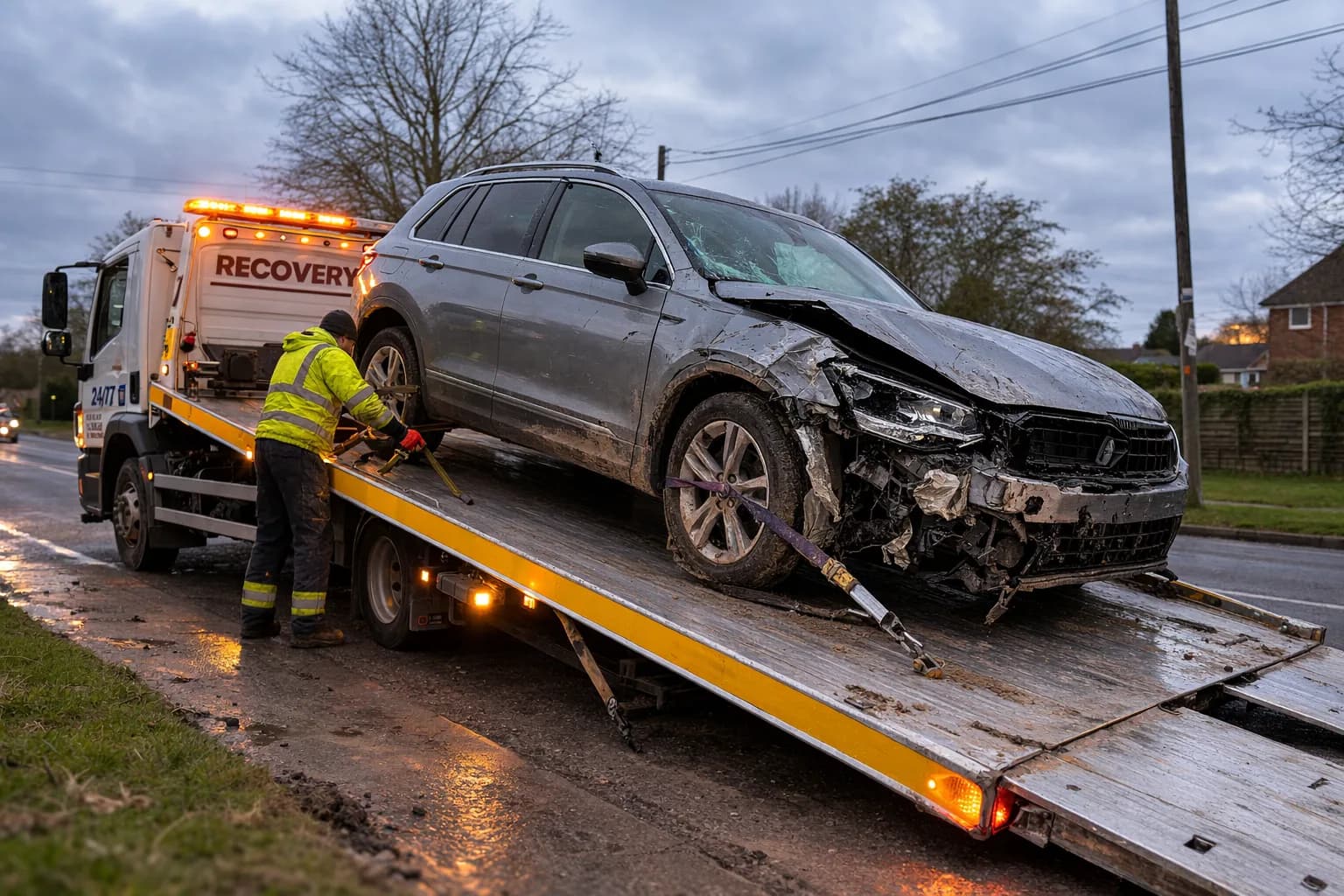
Scrap quotes assume the vehicle is in standard end-of-life condition: it may not start, it may have bodywork damage, and it will have normal wear. What buyers price negatively are surprises: missing wheels (buyers need to move the vehicle), a removed battery, cut wiring looms from catalytic converter theft, or structural damage that prevents the vehicle from being safely loaded onto a transporter.
Be specific when describing the vehicle's condition at the quote stage. Buyers who know exactly what they are collecting can price accurately. Buyers who encounter surprises on the day will adjust their offer downward.
Collection distance and its effect on pricing
Within the B postcode, collection distances are relatively short. An ATF in Tyseley, Perry Barr, or Erdington can typically reach any point in the postcode without significant transport cost. For vehicles at the outer edges — Sutton Coldfield to the north or Halesowen to the south-west — transport costs increase slightly but rarely materially affect the quote in a competitive market.
Longer distances outside the B postcode into surrounding areas can begin to reduce net quotes as fuel, driver time, and vehicle logistics are factored in.
When to sell: metal market timing
Scrap steel and aluminium prices fluctuate month to month in response to global demand, energy costs, and supply chain factors. Prices tend to be stronger when demand from construction and manufacturing is high, and weaker during economic slowdowns. While timing the metal market is not practical for most sellers, it is worth knowing that quotes are not static — if you receive a quote today, it will not necessarily hold for several weeks.
If you are in no hurry, keeping an eye on the market over a few weeks and requesting quotes at different times can give you a sense of whether prices are rising or falling. But in a high-competition area like Birmingham, the difference between ATFs is usually more significant than the difference between months.
Related In Birmingham
Local Page
Scrap my car in Birmingham
Process Guide
How to Scrap Your Car in Birmingham: Collection Logistics, Catalytic Converters, and Getting Paid
Paperwork Guide
Documents Needed to Scrap a Car in Birmingham: V5C, ID, and Handling Missing Paperwork
Pricing Guide
2026 Scrap Car Prices in Birmingham: What Affects Your Quote